





Rijn IJssel is the largest vocational college in Gelderland. Students are challenged to achieve their full potential. Graduates are ready for the job market, see personal development as a given, and know how to navigate society.
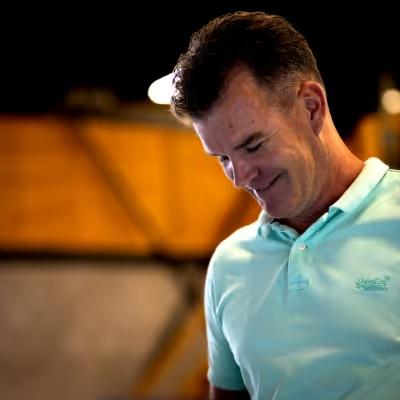
Martijn de Koning works there as the Innovation Lab manager. The aim of the Innovation Lab is to raise students’ technical skills to a higher level. To this end, there is a diverse range of machinery: from lathes to CNC machines and from laser machines to 3D printers. Using all the equipment and techniques in the Innovation Lab, Martijn fosters connections in various ways. Connections with students, but also with colleagues and study programmes.
Collaborating and combining.
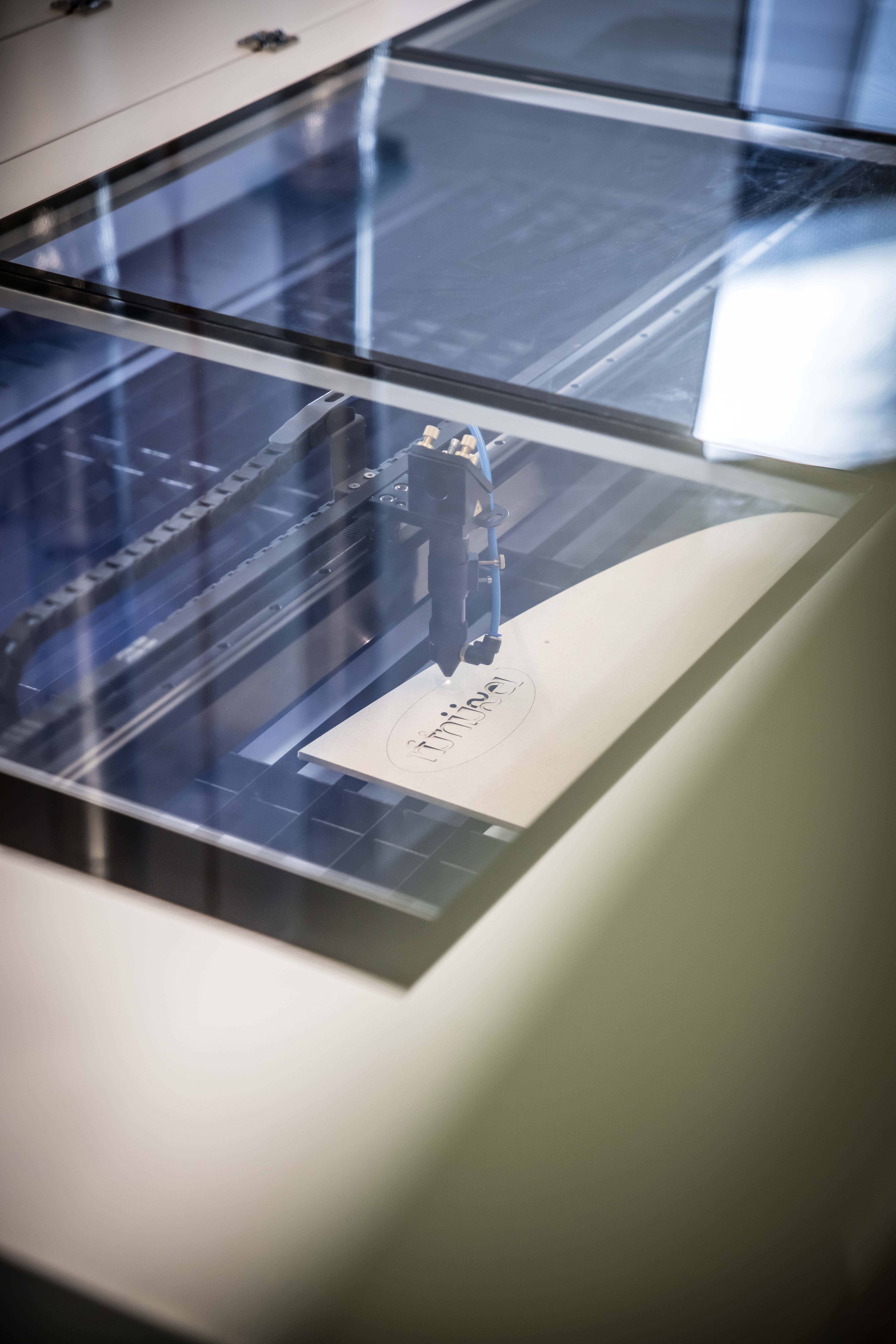
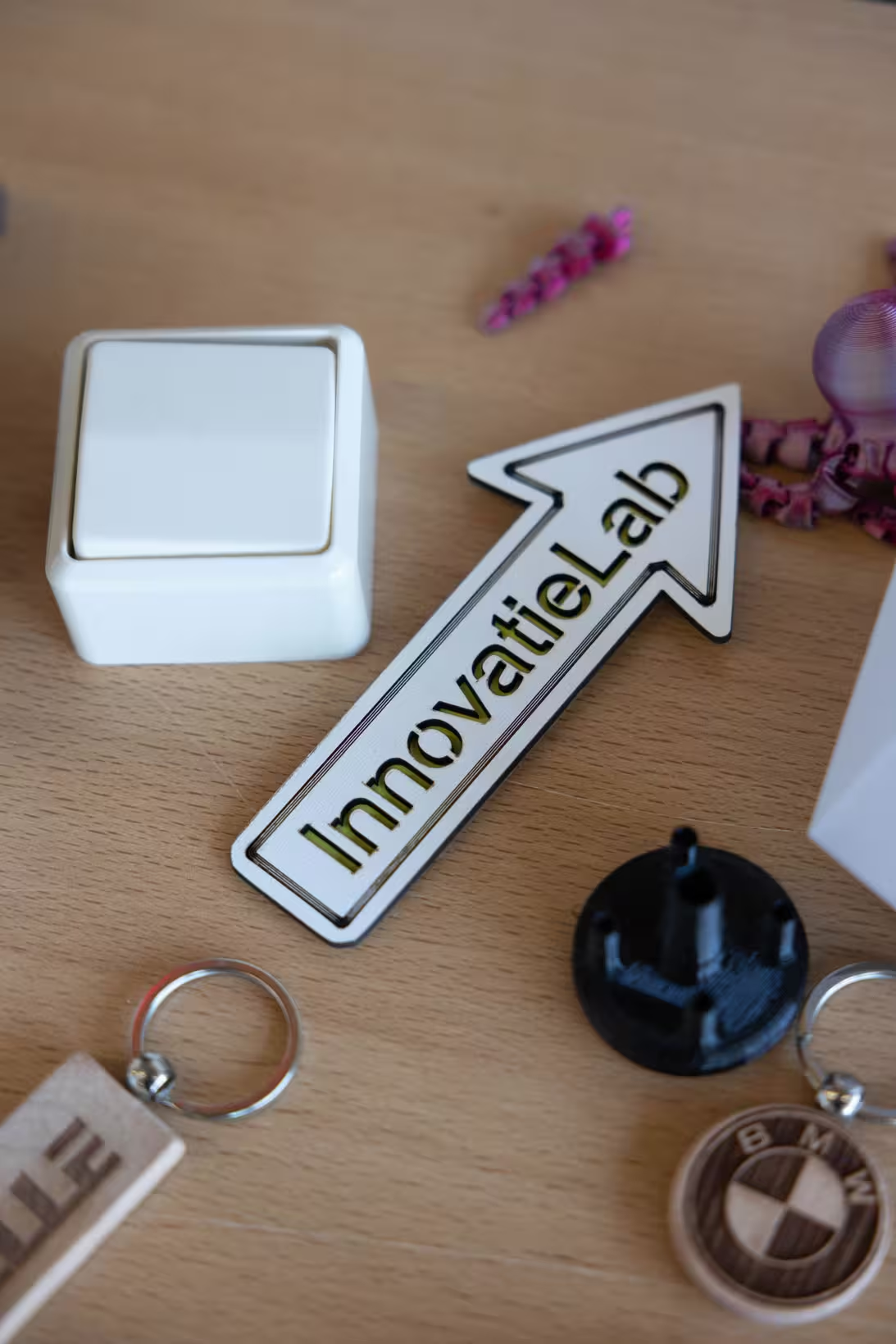
Martijn speaks enthusiastically about the Innovation Lab, with the words ‘together’ and ‘collaboration’ recurring throughout. Working with a student to turn a drawing into a product. Working with a teacher to find a solution for an item that would otherwise have to be bought at great expense. But also making techniques work together – a 3D printer for nameplates and the laser cutter for wood – to create a ‘one-off’ storage box for the reception. The Innovation Lab is used for all sorts of things!
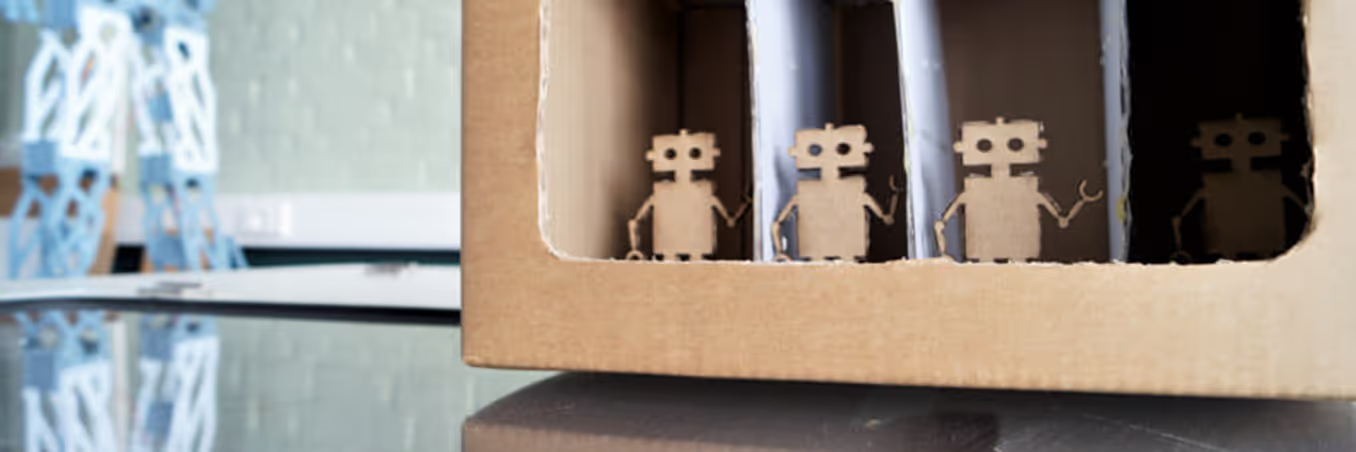
Other schools have now found their way to the Innovation Lab. For instance, pupils from vocational schools visit every week. They learn, for example, to programme using programmable LEGO in a playful way. During an Open Day, they bring their parents along instead of the other way round. Then you hear: ‘Can I just show my dad or mum that robot?’ ‘Yes, of course. The door is always open to them,’ says Martijn.
For everyone at Rijn IJssel.
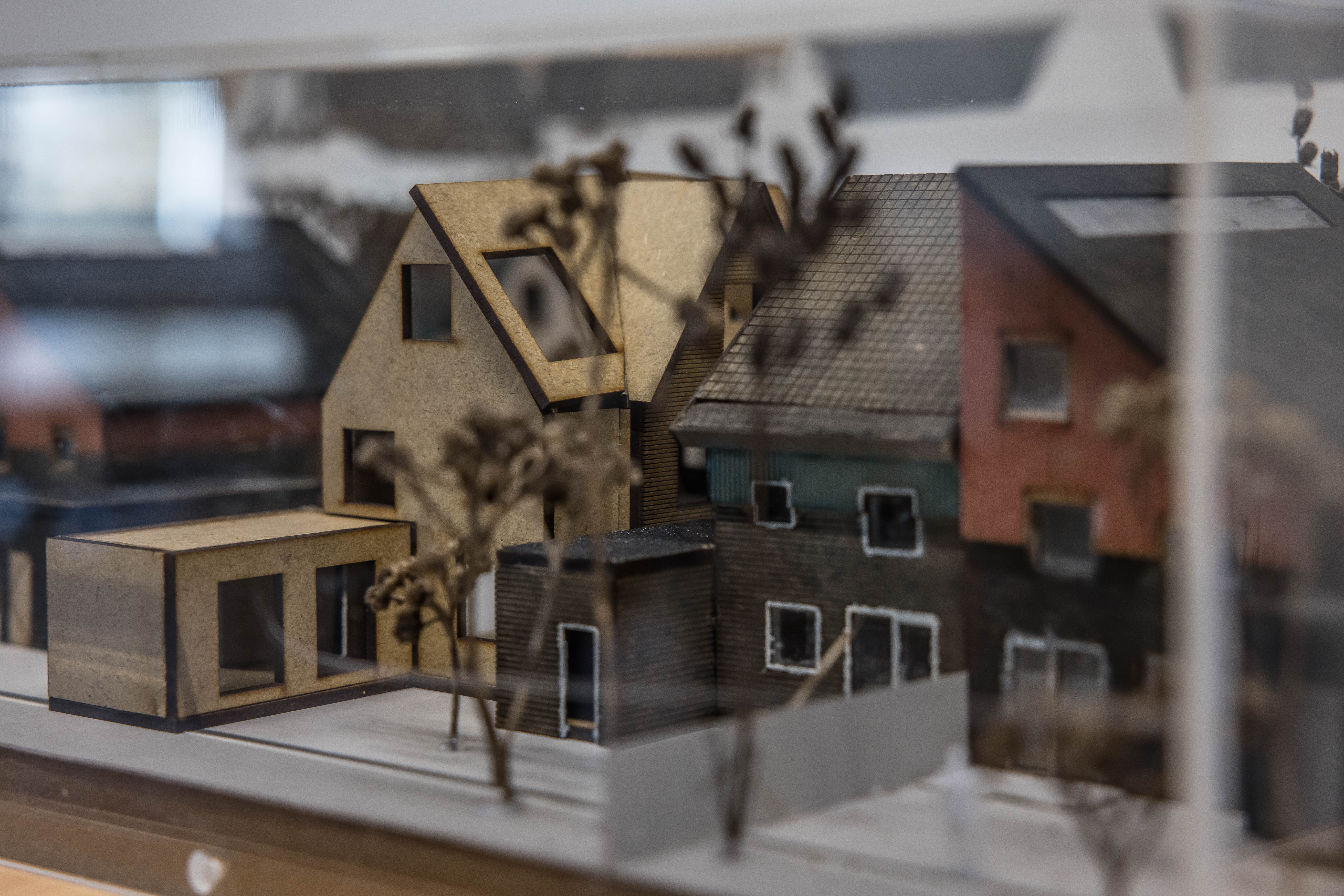
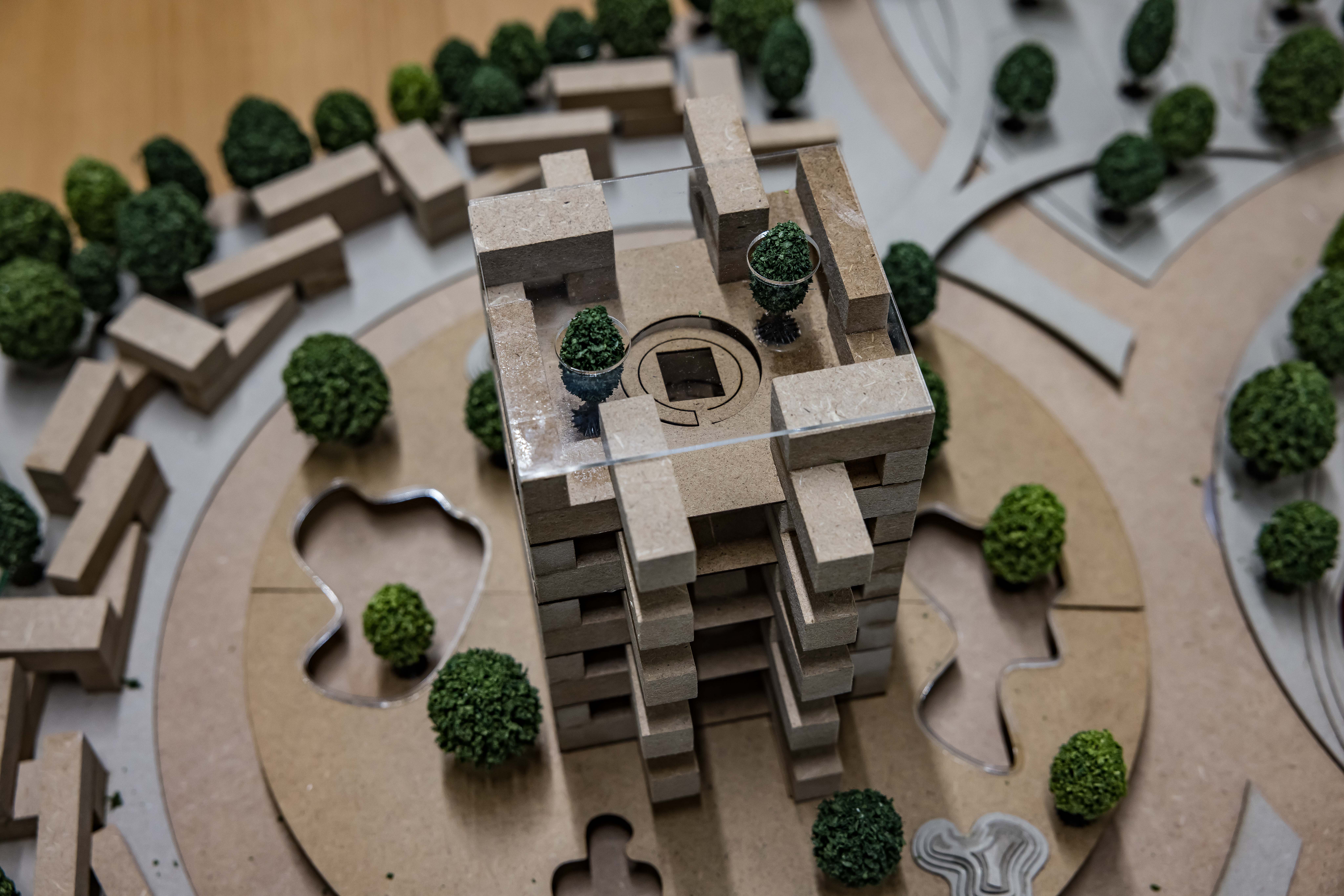
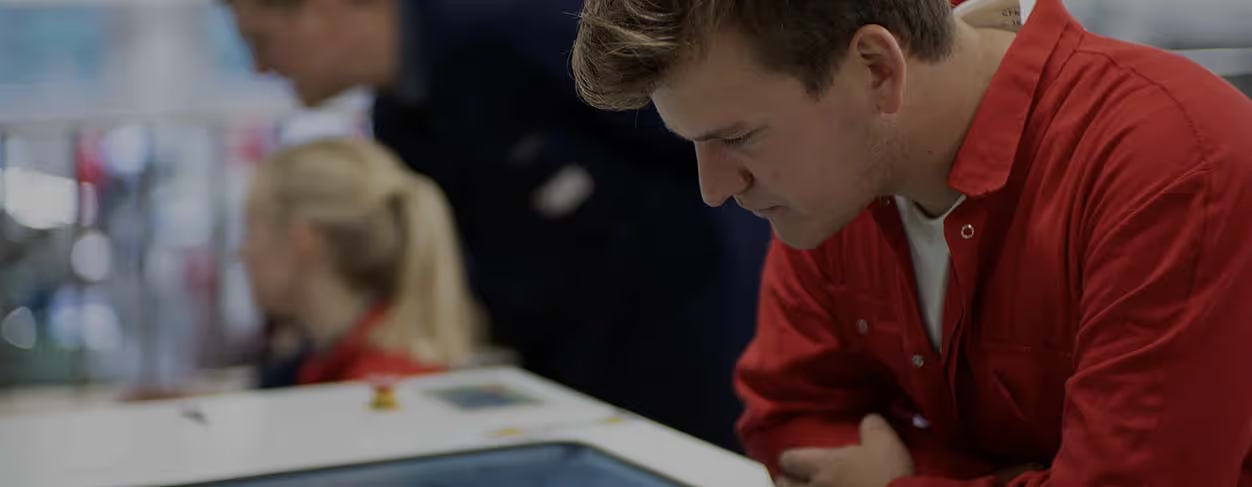
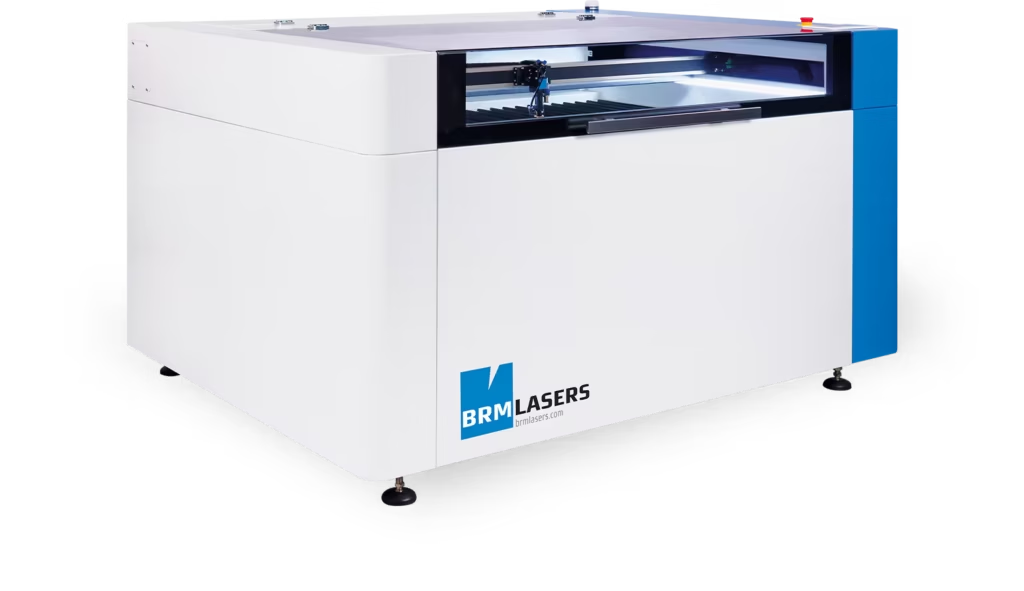
Architecture students are making good use of the BRM laser machine. After all, making models with a knife and a jigsaw is a thing of the past. And in the Engineering programme, machines are being developed that require sheet metal. That used to be outsourced. If a student made a mistake in the drawing, a new order had to be placed. This resulted in extra costs and delays. Now, that too can be done more cheaply and quickly in-house.
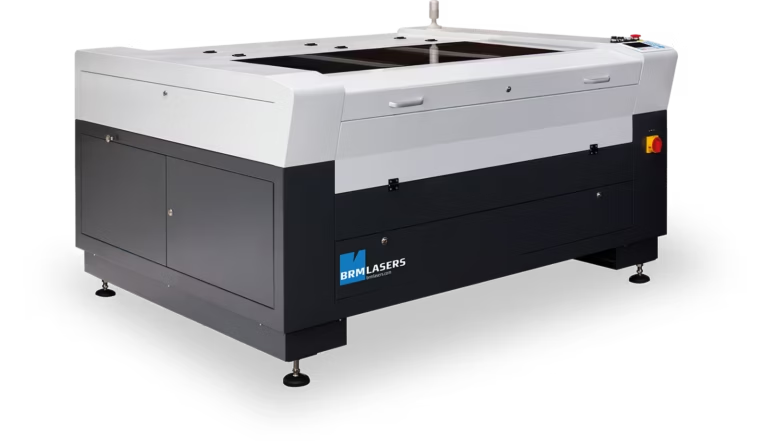
In addition to the projects or prototypes that students come to create, the BRM lasers are also used in other ways. For example, a colleague from the Laboratory Technology department needs 30 pipette holders. These would have to be purchased externally at €45 each. That is expensive, and it wouldn’t solve the problem immediately, as an investment application would be required. Martijn cut the holder out of Plexiglas and 3D-printed the bracket, thereby creating a pipette holder for €2 and making a colleague very happy.
A great step forward.
Martijn describes BRM as technical, enthusiastic and service-oriented. Martijn is delighted with the second BRM laser machine in his Innovation Lab. He considers the user-friendly LightBurn software, which is now included as standard, to be a very welcome step forward.
“We’re delighted with our second machine, and the first one is still going strong.”
Price, accessibility and support
The first BRM laser at Rijn IJssel was purchased by another colleague and was based in the Creative Industries department. It was used so much there that there was no scope to deploy it more widely. When Martijn discovered this machine, he got to grips with it and trained other colleagues so that they too could work with it. He went to see a larger laser machine at Eric’s at BRM. Ultimately, it wasn’t the purchase price that was the deciding factor for Rijn IJssel, but the combination of price, accessibility and support.