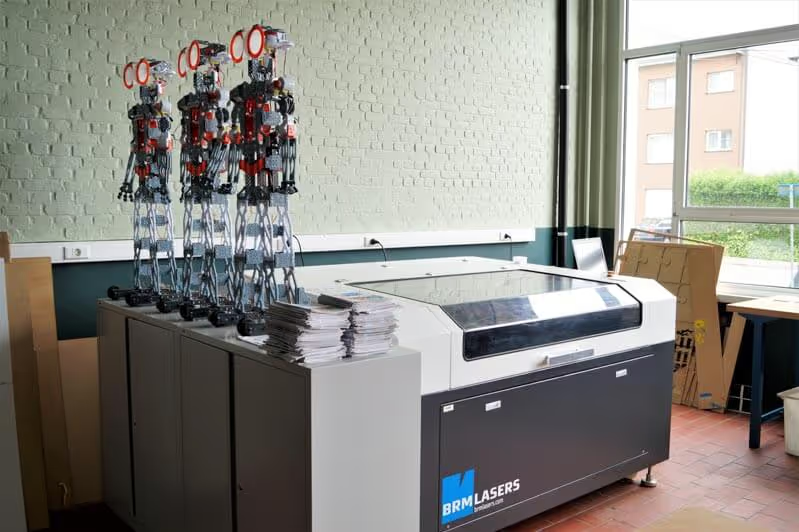



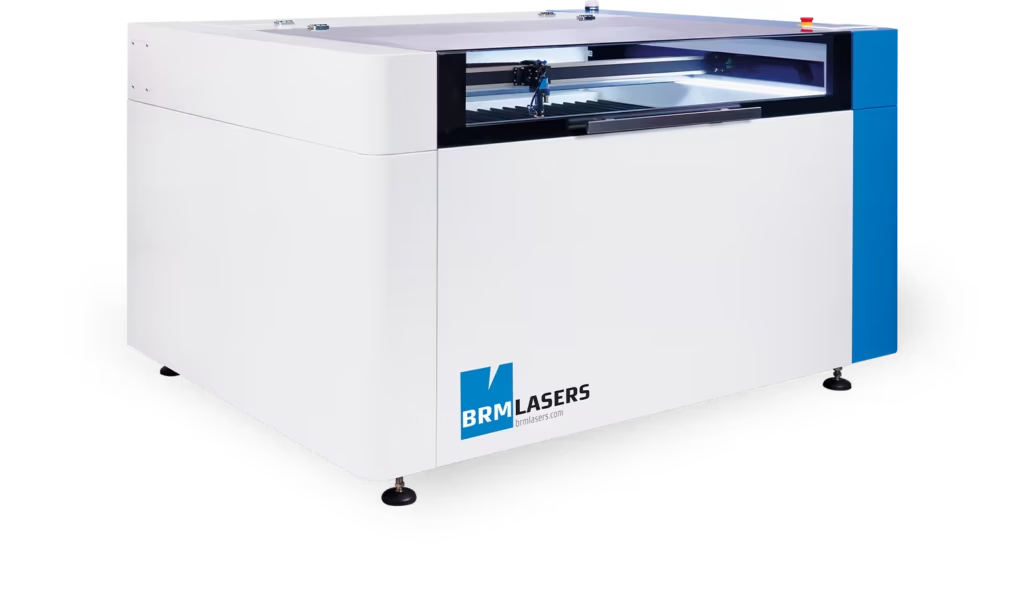



To increase its production capacity further, PTS Boom opted for an additional BRM 90130, thereby choosing the service they were already familiar with from VROTECH.
Ready for use
As a technical advisor and board member at PTS Boom, Patrick Huysmans is responsible for all technical aspects and for the mechanics department in general. He is very pleased with the laser machine, which was purchased back in 2016. Satisfaction reigns, as no significant problems have arisen yet. The machine is always ready for use. He considers the value for money to be excellent. What PTS Boom did do was purchase a new transparent cover, which they swapped for the standard version supplied with tinted glass. The tinted cover meant you couldn’t see your work properly. With this clear version, you can see your project very clearly and follow the cutting and engraving process perfectly.
Service, cost and size are key factors
Before making the purchase, Huysmans requested quotes from five different suppliers of laser machines. As such a purchase is funded from an investment budget, this is necessary. They use the same procedure for this as they do for all major purchases. They then purchase the required equipment from the supplier with the best scores. The quotation takes into account the price and, of course, all technical specifications. It also considers what they, as an educational institution, consider essential.

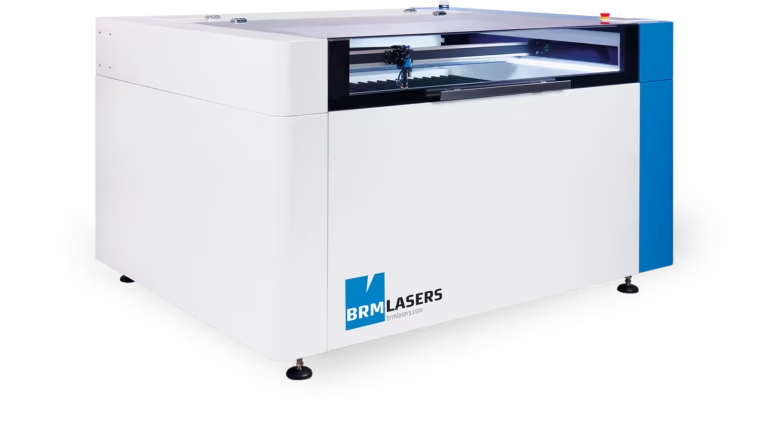
They chose this size because it best suits the dimensions of the workpieces being produced and because it is the largest machine used on this course. Negotiations were also held with a competing brand, but their machines were half the size of VROTECH’s laser machines. After-sales support certainly played a part in the decision. We can take that into account again when purchasing a second machine. We have had virtually no problems, so that factor certainly counts. We have contacted VROTECH on a number of occasions, but that was mainly because PTS Boom was unable to resolve certain issues on its own. These were dealt with and resolved very efficiently over the phone.
The students generally all start with a specific assignment. For example: design something that can be sat on. They then develop the sketch further using 3D software. Based on that design, they consider which material is best suited to the project. If it is decided that it can be made from a thin sheet of wood, they are given the dimensions and then develop their plan based on these. Size and shape are then virtually unrestricted. It must, however, be produced within the specified maximum dimensions. Furthermore, the type of processing required determines which material is chosen.
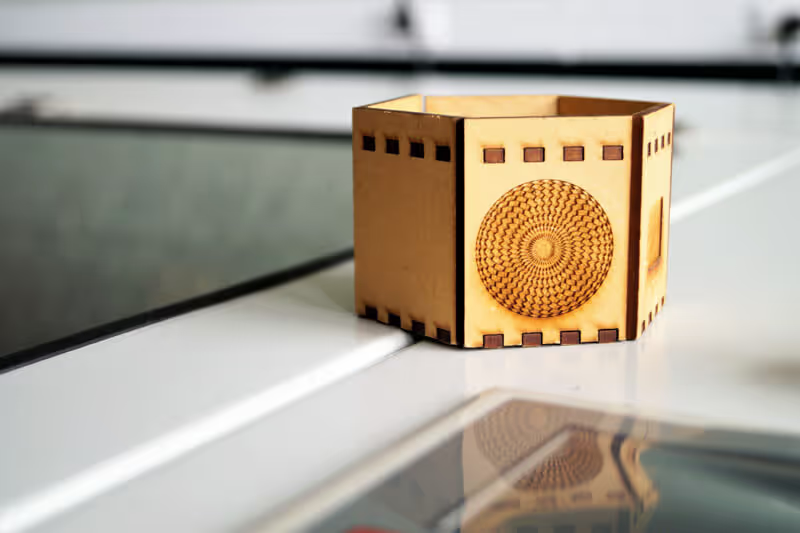
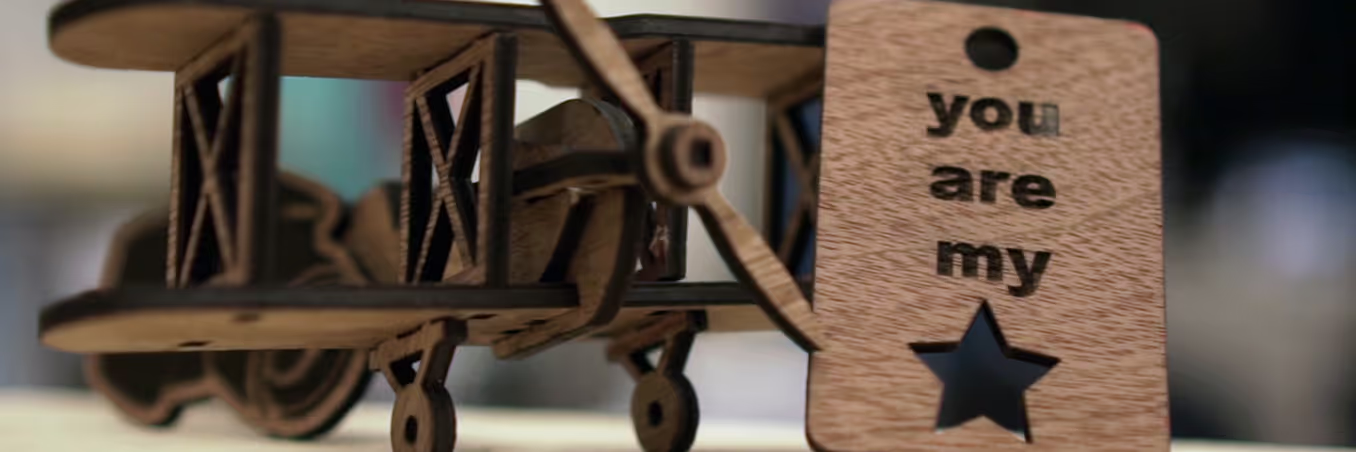
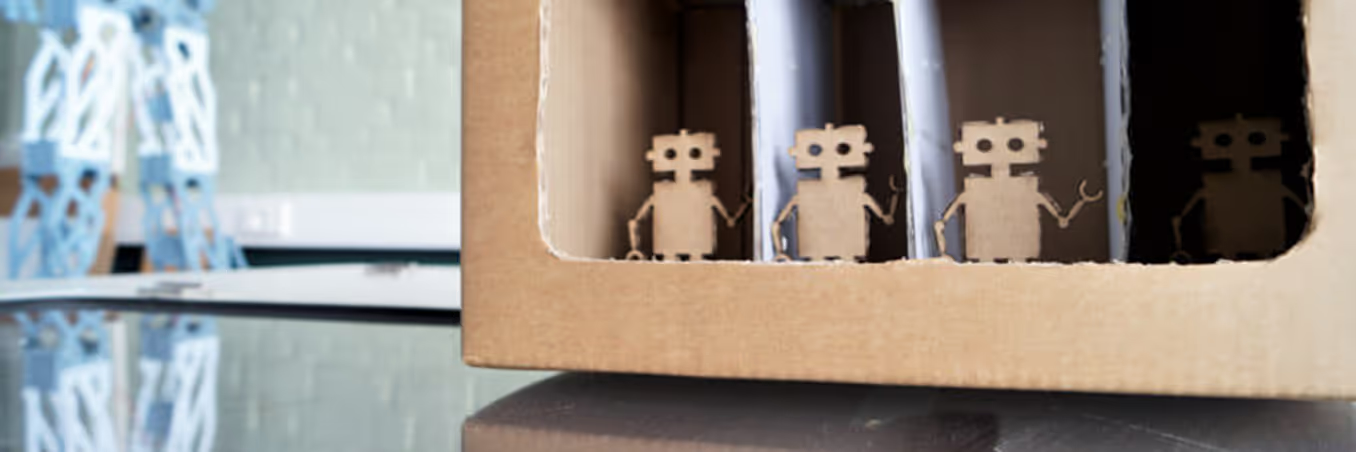
“Students use the machine to make all sorts of things, such as paper aeroplanes, boats, jigsaw puzzles and little boxes.”
The processing method determines the choice of material
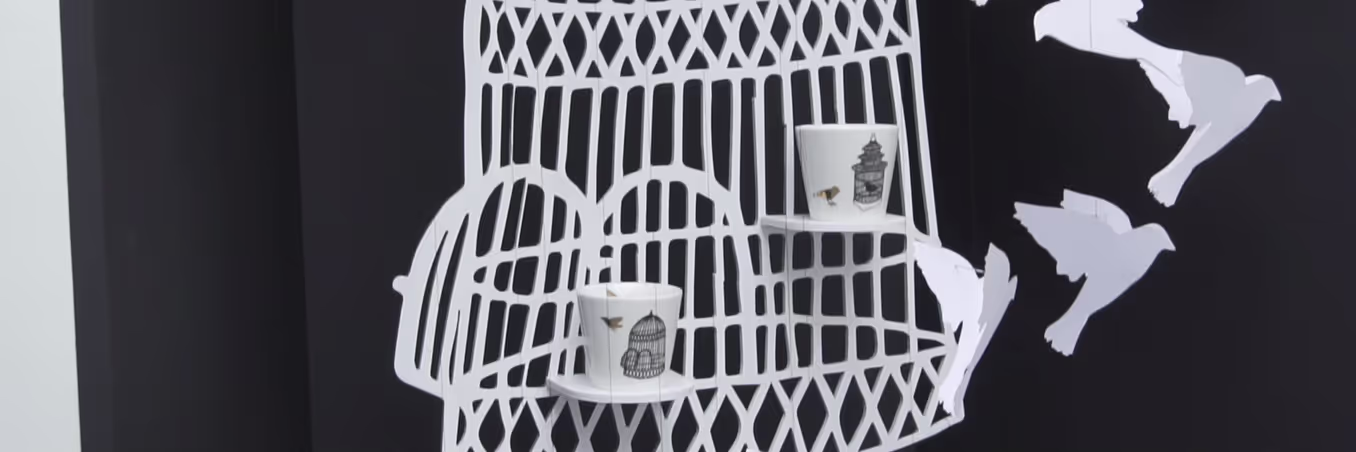
Various raw materials are laser-cut and engraved. For example, they use Graflux, a type of HPL, which has been specifically developed for engraving. Plexiglass, wood, metal and cardboard are also used. For working with aluminium or metal, they have purchased a spray can that applies a coating so that these materials can also be engraved. All sorts of things have already been made: model aeroplanes, boats, jigsaw puzzles and boxes whose parts need to be assembled.